

Why Do Your Teeth Hurt When You Eat Something Cold or Sweet?
Dantam Clinics
September 18, 2026
What Is Tooth Sensitivity?
To understand why a sweet treat or an icy drink makes you cringe, it helps to look at how a tooth is built. Your tooth has three main layers:
- Enamel: The tough, protective outer shell.
- Dentin: The softer middle layer containing millions of microscopic tubes leading directly to the tooth’s nerve.
- Pulp: The innermost core containing blood vessels and sensitive nerves.
Under normal conditions, your enamel covers the crown of the tooth above the gum line, and your gums protect the root underneath. However, when the enamel wears down or the gums recede, tiny channels in the dentin become exposed, allowing sensations to reach the nerves inside the tooth. When cold air, icy water or sugary liquids hit these areas, fluid moves inside the tiny tubules, triggering the nerves inside the tooth and causing sudden discomfort. Addressing enamel wear early helps prevent long-term nerve irritation.
What Causes Sensitive Teeth?
Understanding sensitive teeth causes is the first step toward getting lasting relief. While enamel is the hardest substance in the human body, everyday habits and dental conditions can gradually wear it away. Identifying sensitive teeth causes early helps you protect your smile from further damage.
- Brushing: Using a hard-bristled toothbrush or scrubbing your teeth forcefully can strip away enamel over time. It can also push back your gums, exposing the sensitive root surface. Aggressive brushing remains one of the most common sensitive teeth causes seen in daily dental practice.
- Acidic Foods and Drinks: Frequent consumption of citrus fruits, sodas, sports drinks, and wine can chemically dissolve tooth enamel, making teeth far more susceptible to temperature changes.
- Teeth Grinding (Bruxism): Clenching or grinding your teeth while you sleep puts massive pressure on enamel, causing microscopic cracks and wearing down the protective outer shell.
- Gum Recession and Disease: Gum disease can cause the gums to recede and expose the sensitive tooth roots, making them more vulnerable to hot, cold, and sweet foods and drinks.
- Damaged Restorations or Tooth Decay:
Cracked fillings, chipped teeth, or untreated cavities allow food particles and temperature extremes to reach the inner nerve directly.
Why Sweet Foods Cause Sudden Pain
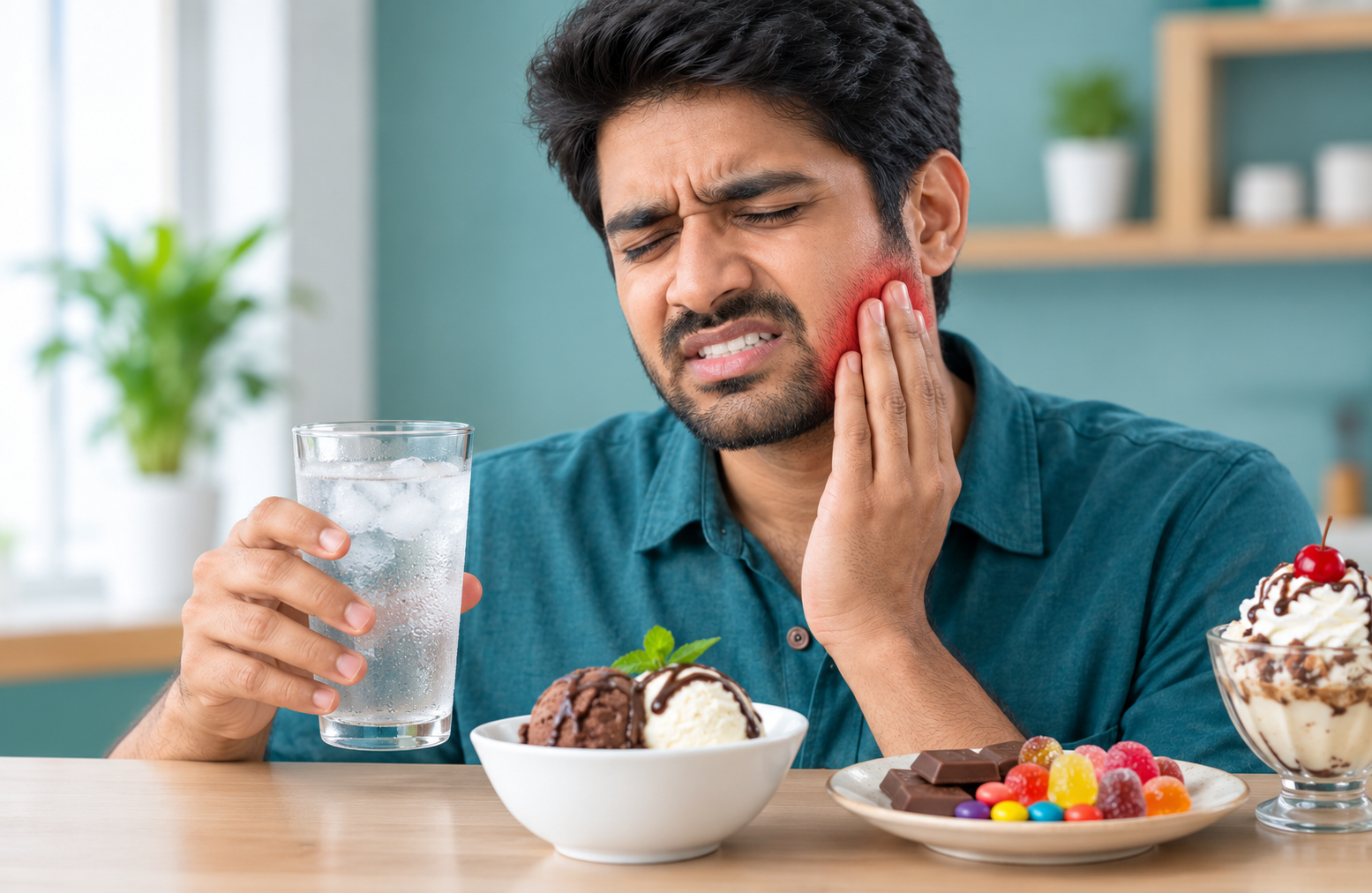
Many people understand why cold items cause discomfort, but experiencing tooth pain when eating sweets can be confusing.
When you consume sugary treats, the sugar dissolves in your saliva, creating a dense, sugary fluid on the surface of your tooth. Through a scientific process called osmosis, this concentrated fluid draws liquid out of the microscopic tubules inside exposed dentin. The rapid movement of fluid inside these tiny channels alters the pressure around the nerves, triggering a sharp pain response. If you frequently notice tooth pain when eating sweets, it may indicate exposed root surfaces or early decay.
Additionally, bacteria in your mouth feed on sugar and produce acid, which instantly irritates exposed dentin and worsens the aching sensation. Paying attention to persistent tooth pain when eating sweets allows you to address cavities before they worsen.
Why Cold Foods Cause Pain
Experiencing teeth sensitivity to cold is one of the most common dental complaints worldwide.
When exposed dentin comes into contact with ice water, frozen treats, or cold air, the fluid within the dentinal tubules rapidly contracts. This sudden movement causes microscopic fluid shifts that tug directly on the nerve endings inside the tooth’s pulp center. The result is that immediate, sharp shock that makes you drop your spoon or cup. Managing teeth sensitivity to cold starts with identifying where enamel has thinned.
If left unaddressed, ongoing teeth sensitivity to cold can make enjoying everyday meals uncomfortable and frustrating.
How to Treat Sensitive Teeth
If you are wondering how to treat sensitive teeth, the good news is that several simple solutions can restore your comfort quickly. Learning how to treat sensitive teeth involves a combination of gentle home habits and targeted dental care.
Daily At-Home Care Tips
- Switch to a Soft-Bristled Brush: Hold your brush at a 45-degree angle and brush gently using small circular motions rather than scrubbing back and forth.
- Use Desensitizing Toothpaste: These specialty toothpastes contain compounds like potassium nitrate or stannous fluoride, which help block the signals travelling from the tooth surface to the nerve. It usually takes 2 to 3 weeks of consistent daily use to feel the full benefits.
- Limit Acidic and Sugary Foods: Reduce your intake of sodas, juices, and sugary snacks. When you do enjoy them, rinse your mouth with plain water immediately afterward.
- Wear a Nightguard: If you grind your teeth at night, a custom-fitted nightguard protects your enamel from fracture and wear.
Professional In-Clinic Solutions
At-home remedies work well for mild cases, but moderate to severe cases require professional clinical treatments to fix the underlying issue permanently.
| Treatment Option | How It Helps |
|---|---|
| Fluoride Varnish | Applied directly in-office to strengthen weak enamel and reduce pain transmission. |
| Dental Bonding | Tooth-colored resin used to cover exposed roots or repair worn enamel areas. |
| Custom Mouthguards | Protects enamel from nocturnal grinding forces. |
| Deep Cleaning | Treats gum line recession and gum disease to protect underlying roots. |
When to See a Dentist
Mild discomfort that comes and goes can often be managed with daily care tweaks. However, you should book a professional check-up if you notice:
- Pain that lasts for minutes or hours after eating or drinking.
- Sharp pain localized to one specific tooth when biting down.
- Visible cracking, chipping, or signs of decay.
- Swelling, bleeding, or redness around your gums.
Ignoring persistent pain can allow minor enamel loss or hidden decay to progress into more complex issues. At Dantam Dental Clinics Kondapur, our experienced dentists provide comprehensive check-ups and advanced treatments to stop tooth sensitivity before it turns into a serious dental problem.
Frequently Asked Questions
How long does it take for desensitizing toothpaste to work?
Can enamel sensitivity go away on its own?
Is sharp dental discomfort a sign of a cavity?
Should I brush my teeth immediately after eating something sweet or acidic?
SUBSCRIBE
SUBSCRIBE TO OUR NEWSLETTER

Why Do Your Teeth Hurt When You Eat Something Cold or Sweet?
A Small Toothache Today Could Become a Bigger Problem Tomorrow