

Teeth Grinding at Night and Its Hidden Impact on Dental Health
Dantam Clinics
November 13, 2026
What Is Bruxism?
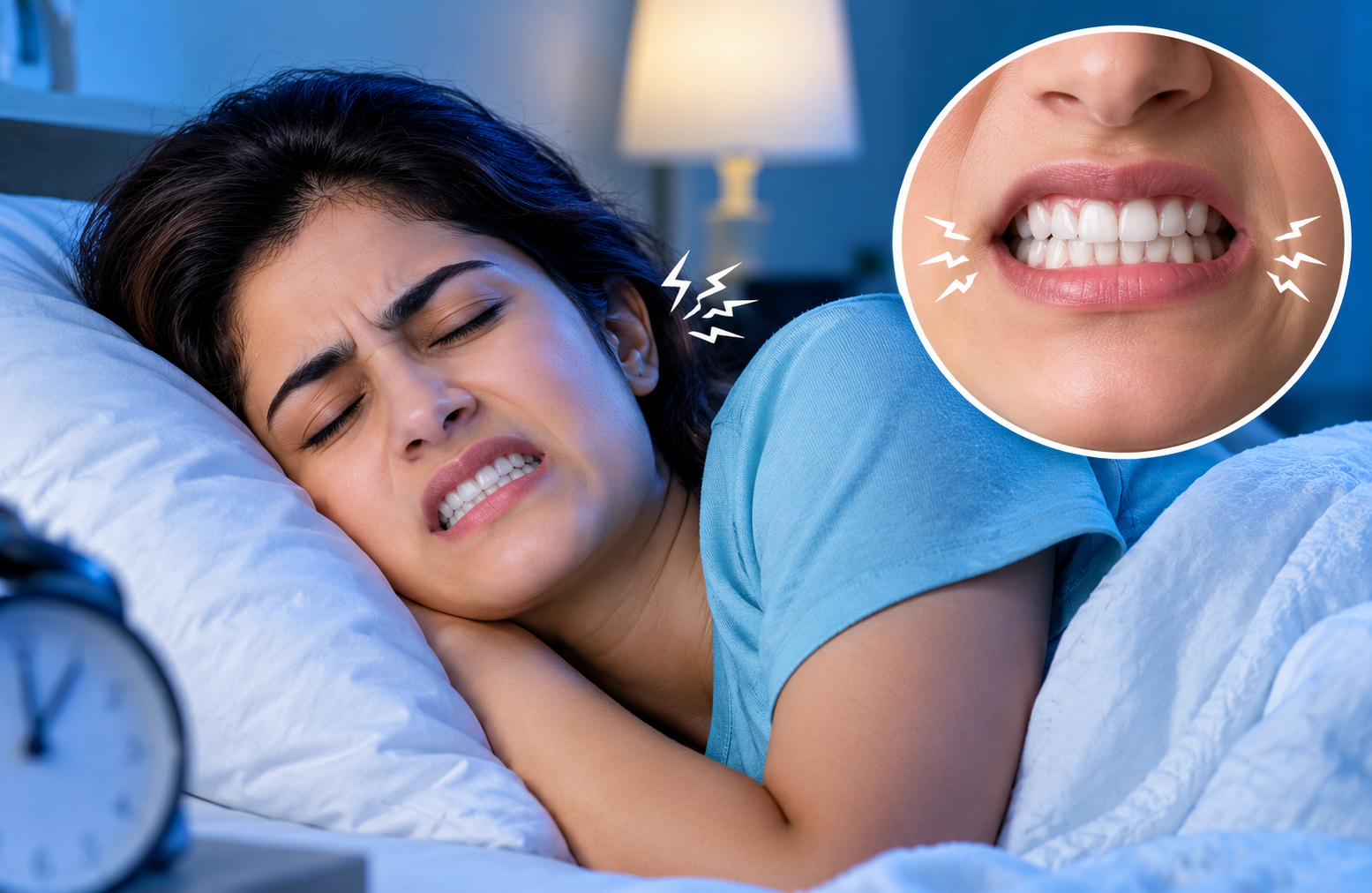
Teeth grinding, also called bruxism, happens when a person clenches the jaw or rubs the upper and lower teeth together. It can occur during the day or sleep, but nighttime episodes often go unnoticed.
Sleep Bruxism means grinding or clenching during sleep. Repeated involuntary jaw movements can wear enamel, increase sensitivity and cause discomfort.
Common Causes of Nighttime Teeth Grinding
1. Stress and Anxiety
2. Sleep Issues
Conditions such as obstructive sleep apnoea may be associated with grinding. Frequent waking and poor quality sleep can also occur. Discuss loud snoring or daytime tiredness with a healthcare professional.
3. Lifestyle Habits
4. Medication and Other Factors
Some medicines, including certain antidepressants, may contribute. Genetics and nervous system differences may also play a role.
Signs and Symptoms
- Morning headaches, especially around the temples.
- A stiff or sore jaw after waking.
- Sensitivity to hot and cold foods.
- Flattened, chipped or worn teeth.
- Pain while chewing or opening the mouth.
- Clicking around the jaw joint.
- Facial muscle discomfort or disrupted sleep.
How Can Grinding Affect Your Dental Health?
1. Enamel Wear and Tooth Damage
2. Increased Tooth Sensitivity
3. Jaw Pain and Muscle Fatigue
4. Damage to Dental Restorations
5. Temporomandibular Joint Discomfort
How Is Grinding Diagnosed?
A dentist checks for worn enamel, damaged teeth, jaw tenderness and bite changes. They may ask about headaches, sleep, stress and grinding sounds.
If a sleep disorder is suspected, your dentist may recommend further assessment. The examination helps guide a suitable care plan.
Treatment Options for Teeth Grinding at Night
1. Custom Night Guard
2. Stress Management
3. Lifestyle Changes
4. Repairing Dental Damage
Fillings, crowns or other restorative treatments may repair damage. Your dentist can recommend an option based on each tooth’s condition.
5. Addressing Sleep Conditions
When Should You Visit a Dentist?
See a dentist for recurring jaw pain, headaches, chipped teeth, sensitivity or chewing difficulty. If you notice teeth gritting, an examination can identify possible causes and suitable preventive care. Mention relevant medicines, sleep changes and habits. The search phrase teeth grouting may refer to nighttime clenching, but assessment is needed. Ask about teeth gritting, discuss bruxism grinding teeth, then ask whether teeth gritting and bruxism grinding teeth require assessment.
Dental Care at Dantam Dental Clinics in Kondapur
Frequently Asked Questions
What causes teeth grinding at night?
Is nighttime grinding harmful?
What is the difference between Sleep Bruxism and daytime grinding?
Sleep Bruxism happens during sleep, daytime grinding occurs while awake. Both place pressure on teeth and jaw muscles.
When should I seek help for bruxism grinding teeth?
What does crushing teeth during sleep mean?
SUBSCRIBE
SUBSCRIBE TO OUR NEWSLETTER
Teeth Grinding at Night and Its Hidden Impact on Dental Health

Can Your Tongue Be the Reason for Bad Breath?