

Does Chewing Gum Help or Harm Your Teeth?
Dantam Clinics
October 1, 2026
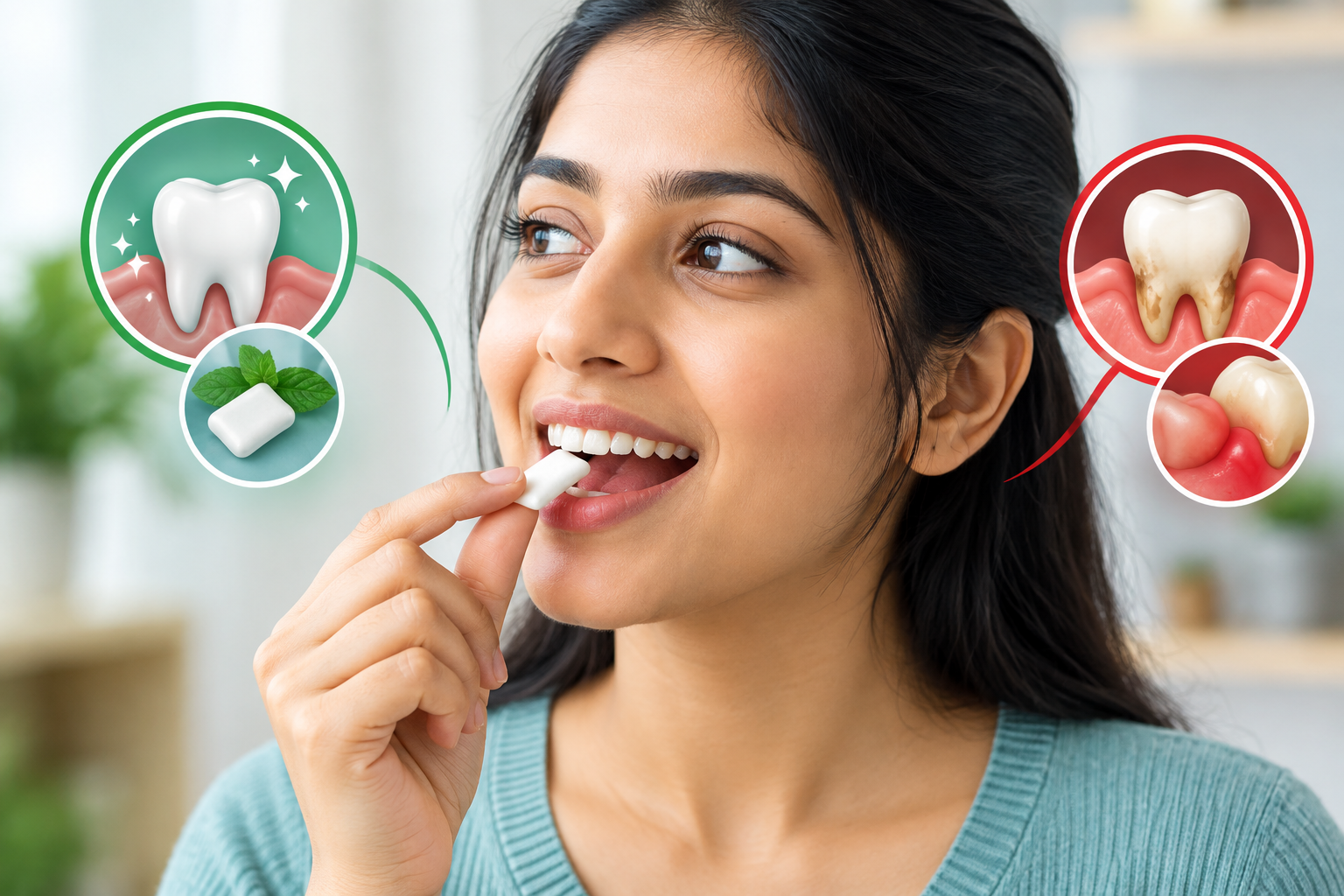
The idea of chewing gum and teeth might appear a bit odd, but the kind of gum you pick can have an effect on your smile. Many people eat gum after meals when brushing is not convenient. Sugar-free gum helps to boost saliva, sweeps up food particles, and aids in neutralising the acids in the mouth. On the other hand, gum containing ordinary sugar can lead to greater exposure to sugars that cause cavities. Therefore, can chewing gum contribute to good oral health? Yes, it can be of benefit to your mouth provided that you select the correct type and use it as a supplement to your regular dental care.
How Chewing Gum and Teeth Work Together
When you chew, your mouth makes more saliva. Saliva is your body’s natural cleaner. It washes away leftover food, weakens the acids that build up after eating, and carries minerals that keep your enamel strong. Enamel is the hard outer layer of your teeth.
Chewing for about 20 minutes after a meal can give this natural cleaning a helpful boost. Still, gum is not a toothbrush. It cannot remove plaque, the sticky film that slowly builds up on your teeth.
The Benefits of Chewing Gum for Your Mouth
Let us look at the benefits of chewing gum in plain words. First, it increases saliva, which clears away food and calms mouth acids. Second, it can freshen your breath for a short time. Third, some gums contain xylitol, a sweetener that cavity-causing germs cannot use easily.
These benefits of chewing gum are small but real, especially when you cannot brush right away, such as at work or while travelling. Remember, though, that gum is only a helper. Brushing twice a day with fluoride toothpaste and cleaning between your teeth once a day still do the heavy lifting.
Is Chew Gum Good for Health?
People often ask if chewing gum is good for health. Sugar-free gum can support oral health by increasing saliva flow, which helps your mouth manage acids after eating and drinking.
Gum is not necessarily a healthy choice since sweets added to it can provide oral bacteria with the means to produce acids. Additionally, gum that is very hard or tough might cause discomfort for those who already have jaw pain or problems with their jaw joint.
Gum should be regarded merely as a minor aid for oral care and not as a substitute for eating healthily, brushing your teeth or seeking professional dental advice.
How to Pick a Sugar-Free Gum for Your Teeth
Regular gum is full of sugar, and sugar is the favourite food of the bacteria in your mouth. These bacteria turn sugar into acid, and acid slowly wears down enamel. The more often your teeth meet sugar, the more often they come under attack.
Sugar free gum for teeth works in the opposite way. It gives the bacteria nothing to feast on, while still boosting your saliva. That is why dentists usually say sugar free gum for teeth is a far better choice than the sugary kind. Sweeteners such as xylitol, sorbitol, and mannitol are common in these products, and they are much kinder to your smile.
Does Chewing Gum Cause Cavities?
Here is the question many people ask: does chewing gum cause cavities? The act of chewing does not cause them. Sugar does. Gum loaded with sugar keeps feeding bacteria for as long as you chew, which raises your risk of decay.
Sugar-free gum, on the other hand, does not carry that risk. In fact, by increasing saliva, it may help protect your teeth when it is part of a good daily routine. So when someone asks whether gum leads to holes in teeth, the fair answer is: only if it contains sugar.
How to Choose the Best Chewing Gum for Teeth
- Zero added sugar: This is the most important point.
- Xylitol or sorbitol: These sweeteners are gentle on teeth, and xylitol may reduce cavity-causing bacteria.
- A dental seal: In many countries, a seal from a dental association, such as the ADA Seal of Acceptance, shows the gum has been reviewed for safety and dental claims.
Important Precautions
Even good gum has limits, so keep these points in mind:
- Do not skip brushing: Gum is an extra layer of care, not a replacement.
- Protect your jaw: Chewing for too long can strain the jaw joint and cause soreness or headaches. Stop after about 15 to 20 minutes.
- Watch your stomach: Large amounts of xylitol and similar sweeteners can cause mild stomach upset in sensitive people.
Children should chew gum only when old enough to avoid swallowing it; parents should pick sugar-free ones.
Frequently Asked Questions
What is the link between chewing gum and teeth?
Is sugar-free gum better than regular gum?
Does chewing gum cause cavities?
How long should I chew gum?
Can gum replace brushing?
SUBSCRIBE
SUBSCRIBE TO OUR NEWSLETTER

Does Chewing Gum Help or Harm Your Teeth?

Are You Brushing Your Teeth the Right Way?