

Electric vs Manual Toothbrush: Which Is Better for Your Teeth?
Dantam Clinics
August 14, 2026
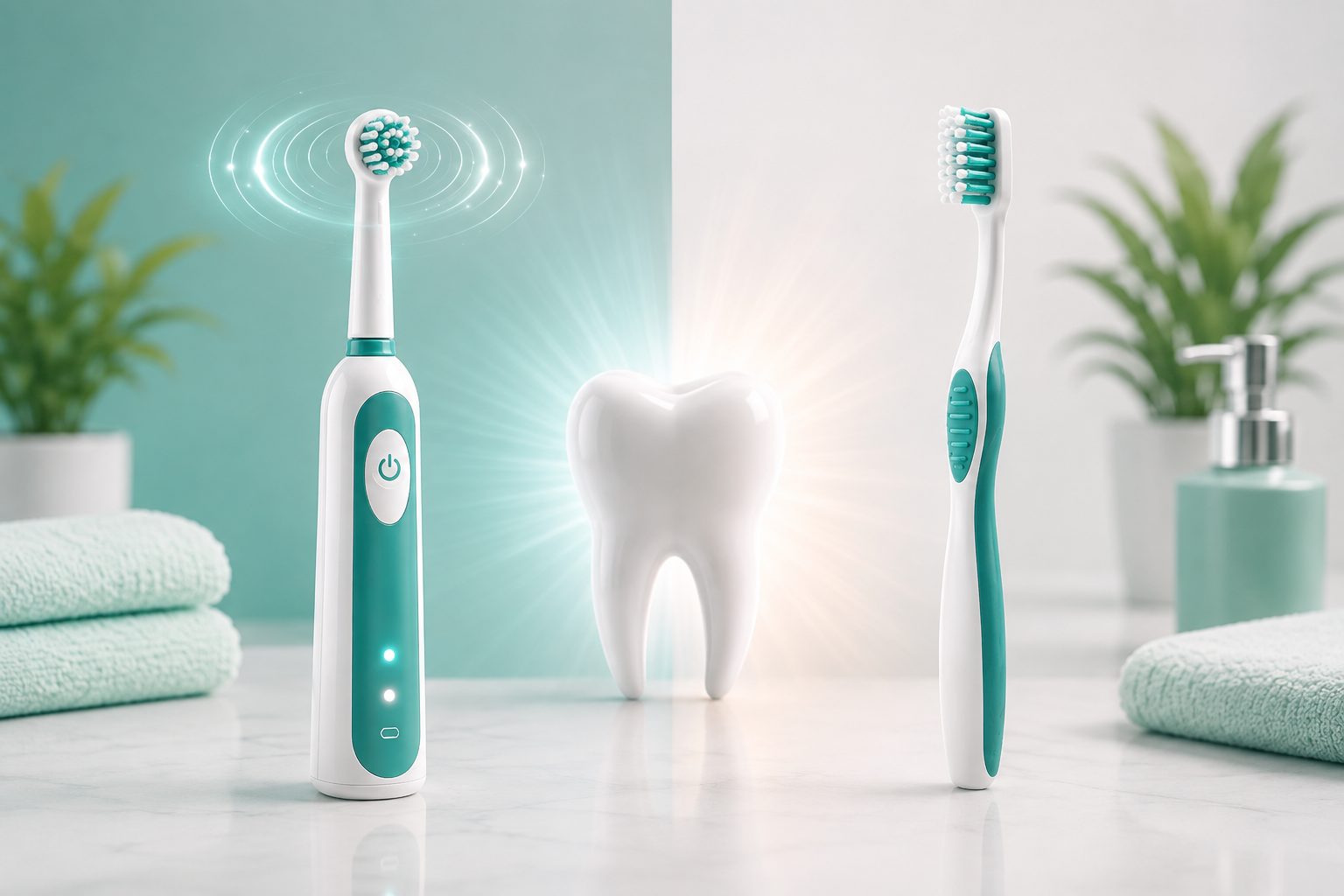
Choosing between an Electric vs Manual Toothbrush can feel more confusing than it should. One option is simple, familiar and affordable, while the other offers powered movement, timers, and extra features. But more technology does not always mean better brushing. The right brush for teeth is the one that helps you clean comfortably, gently, and consistently. Your technique, brushing time and ability to reach every surface still matter. Understanding how both options work can help you make a practical choice for your daily routine.
Why Your Toothbrush Choice Matters
A toothbrush helps remove plaque and food particles from the surfaces of your teeth. If plaque stays in place too long, it may contribute to cavities, gum irritation, and bad breath.
Choosing the best toothbrush can support your routine, but the brush cannot do all the work. Brushing twice a day, spending enough time, and using gentle movements are equally important. A simple brush used carefully may be more effective than an advanced device used in a hurry.
How a Traditional Toothbrush Works
A Manual toothbrush gives you full control over speed, direction, and pressure. It requires no charging or batteries, is easy to replace and is convenient for travel.
Its main limitation is that the cleaning action depends entirely on your technique. If you brush too quickly, press too hard, or repeatedly miss the back teeth, the brush cannot alert you. Still, when used carefully for enough time, it can clean effectively.
How a Powered Brush Works
A powered brush creates its own cleaning movement. Depending on the model, the head may rotate, oscillate, vibrate or create rapid sonic movement while you guide it around your mouth.
Many models include a two-minute timer or pressure sensor. These features may help people who rush or press too firmly.
When comparing Electric vs Manual Toothbrush options, these added features are among the clearest differences. Powered movement may also help people who find repeated hand movements uncomfortable.
Key Differences Between the Two
| Factor | Powered Option | Traditional Option |
|---|---|---|
| Brushing action | Uses automated movement | Controlled by hand |
| Ease of use | May require less hand motion | Requires more manual control |
| Extra features | May include timers and pressure alerts | Usually has no built-in features |
| Cost | Usually costs more | Generally more affordable |
Neither option is automatically better for everyone. Your habits and comfort should guide the choice.
Which One Cleans Better?
Many people ask, is an electric toothbrush better than a manual toothbrush?
For some users, powered movement can make consistent cleaning easier. A timer may encourage a full two minutes of brushing, while a pressure alert can reduce forceful scrubbing.
A traditional brush can also remove plaque effectively when used correctly. The difference often comes down to technique and consistency.
Whichever option you choose, clean the front, back, and chewing surfaces of every tooth. Give extra attention to the gumline and back molars because these areas are easy to overlook.
Brushing Technique Still Matters
Changing your toothbrush will not automatically correct poor brushing habits.
Use gentle, controlled movements instead of scrubbing as hard as possible. More pressure does not necessarily mean cleaner teeth and may make the gums uncomfortable.
It can help to follow the same order each time you brush. Clean the outer surfaces first, then the inner surfaces, and finish with the chewing surfaces.
When choosing a brush for teeth, make sure the head can comfortably reach the back of your mouth. Cleaning between the teeth is also important because ordinary bristles cannot reach every narrow space.
When a Powered Brush May Be Easier
A powered option may suit people who struggle with repeated hand movements or who often stop brushing earlier than they realize.
A timer can remove the guesswork, while a pressure sensor may help someone who tends to scrub aggressively. These features can make the routine easier to follow.
This is why the answer to is an electric toothbrush better than a manual toothbrush can vary from person to person.
When a Traditional Brush May Suit You Better
A Manual toothbrush can be a sensible choice if you prefer something simple.
It is inexpensive, easy to replace, and does not need charging. It is also lightweight and convenient for travel.
If you already brush carefully, use gentle pressure, and spend enough time on every section, you may not need extra features.
What About Sensitive Teeth and Gums?
People with sensitivity often focus on finding the best toothbrush, but pressure and bristle softness matter just as much. Soft bristles and gentle movements are usually more comfortable for everyday cleaning.
Ongoing sensitivity, bleeding gums, or discomfort may also be linked to cavities, gum problems, or enamel wear. If symptoms continue, speak with a dentist.
What Should You Look for Before Buying?
The handle should be easy to hold, and the head should be small enough to reach the back teeth.
Your ideal brush for teeth should fit naturally into your day. The best toothbrush is usually the one that encourages consistent brushing rather than the one with the most impressive packaging.
Think about your actual habits before paying for extra features. A timer can be useful if you regularly stop brushing too soon, while a pressure alert may help if you tend to press too firmly.
How Often Should You Replace Your Toothbrush?
Replace worn or frayed bristles because they may not clean as effectively. A common guideline is every three to four months, or sooner when visible wear appears.
With a Manual toothbrush, the complete brush is replaced. With a powered model, usually only the head needs changing.
If the bristles begin spreading out much earlier than expected, it may also be a sign that you are using more pressure than necessary while brushing.
How Should You Decide?
When comparing these toothbrush choices, think about your real brushing habits.
If you often stop too early, a timer may help. If you use too much pressure, a sensor may be useful. If you travel frequently or prefer simplicity, a traditional option may be more convenient.
For many people, the real question remains is an electric toothbrush better than a manual toothbrush. The answer depends on whether extra features actually help you brush more thoroughly and consistently.
Price can also influence your decision. A powered model normally has a higher initial cost and requires replacement heads, whereas a traditional option is inexpensive to replace. The more expensive choice is not automatically the better choice for your mouth.
Simple Habits That Improve Brushing
Whichever option you choose, aim to brush for around two minutes twice a day. Follow a regular pattern so that you clean the outer, inner, and chewing surfaces instead of spending most of your time on the visible front teeth.
Use gentle pressure and give extra attention to the gumline and back molars. Cleaning between the teeth is also important because a toothbrush cannot reach every narrow space.
A suitable brush for teeth supports these habits, but consistency is what makes the routine effective over time.
Remember to give the same attention to both sides of your mouth. Many people naturally spend more time brushing the side that feels easier to reach. Following a fixed pattern can help prevent this habit and make your routine more balanced.
Frequently Asked Questions
Electric vs Manual Toothbrush: Which one is better?
Is an Electric Toothbrush better than a manual toothbrush?
How do I choose a brush for teeth and gums?
How long should I brush?
Which type is easier for beginners?
Choosing What Works for You
There is no single option that suits everyone. A Manual toothbrush can be practical and effective, while a powered brush may provide useful guidance for people who want timers, pressure alerts, or automated movement.
If you are still asking is an electric toothbrush better than a manual toothbrush, consider your own habits rather than focusing only on technology. Comfort, technique, consistency, and the ability to reach every tooth matter most.
Good habits matter more than extra features alone for most people. A toothbrush is only a tool. What makes the biggest difference is how well you use it every day.
SUBSCRIBE
SUBSCRIBE TO OUR NEWSLETTER
Does Chewing Gum Help or Harm Your Teeth?
Are You Brushing Your Teeth the Right Way?