

Does Thumb Sucking Cause Crooked Teeth in Children?
Dantam Clinics
September 4, 2026
Thumb sucking is a common habit among babies and young children. It can help them feel calm, secure, or sleepy. However, when the habit continues for a long time, it may affect how the teeth and jaws develop. The effect depends on the child’s age, frequency, duration, intensity and the position of the thumb.
How Can the Habit Affect Dental Development?
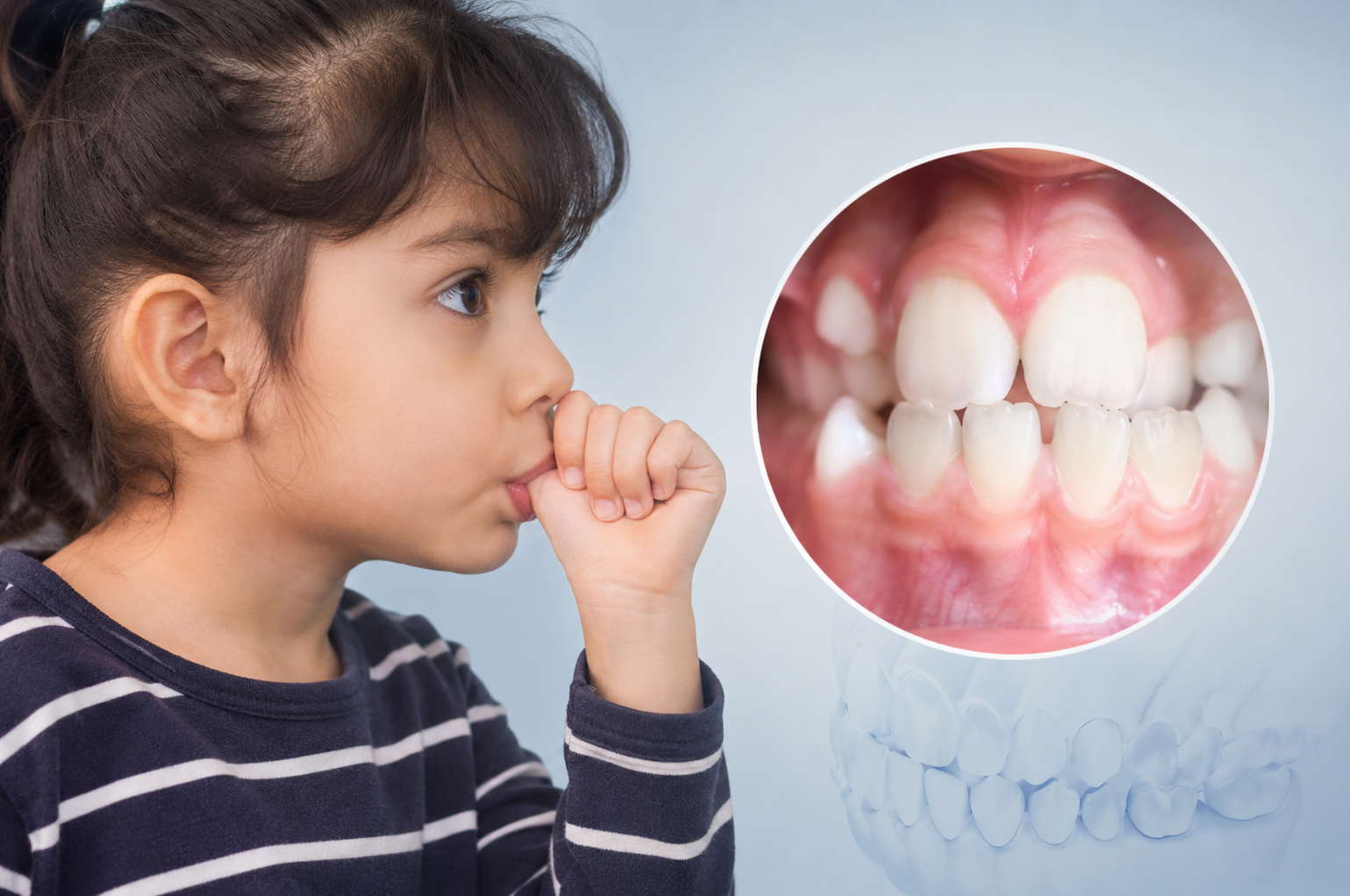
During early childhood, occasional thumb sucking is usually less concerning. The upper front teeth may move forward. Understanding thumb sucking effects on teeth can help parents notice changes. Knowing the thumb sucking effects on teeth may also encourage an earlier dental check. Lower teeth can tilt inward. This may contribute to an increased overjet, an open bite or changes in how the upper and lower jaws meet.
The thumb sucking effects on teeth can become more noticeable when the habit is frequent, forceful, and continues for several years. Children who keep the thumb in their mouth for long periods may be more likely to develop alignment changes than children who do it occasionally.
Understanding Thumb Sucking and Crooked Teeth
Not every child who sucks a thumb develops dental problems. This is why understanding thumb sucking and crooked teeth can help parents recognize when monitoring is useful. Parents often notice gaps, protruding front teeth or an unusual bite.
A dentist can examine the teeth and bite to identify early changes. If the bite has already changed significantly, orthodontic treatment may be considered later, depending on the child’s growth and dental development.
When Should Parents Be Concerned?
There is no single age at which every child must stop. Concern increases when strong thumb sucking continues after permanent front teeth begin erupting or when parents notice changes in the bite.
These signs do not automatically mean treatment is needed, but they are good reasons to schedule a dental assessment.
How to Stop Thumb Sucking
Learning ways to reduce the habit works best when parents use patience rather than punishment. Positive encouragement is usually more helpful than criticism. Gentle reminders can help older children become aware of when they are sucking their thumb. If the habit is difficult to break, a dentist can discuss age appropriate strategies and when necessary, dental appliances.
Parents learning how to stop thumb sucking should encourage children to gradually stop as they grow. Professional guidance can explain how to stop thumb sucking, identify triggers and suggest practical alternatives. A calm bedtime routine, praise and consistent reminders may make the process easier.
Can the Teeth Correct Themselves?
When the habit stops early, some bite changes may improve naturally as the child grows. However, the extent of improvement varies. Persistent changes may remain and require orthodontic evaluation.
The goal is not simply to stop a habit but to protect healthy jaw growth, tooth alignment, chewing and oral function. A dentist can recommend an approach tailored for the child.
Supporting Healthy Dental Development
If the habit is linked to anxiety, tiredness, or a particular situation, understanding the trigger can make habit reduction easier. Avoid embarrassing or scolding the child because pressure may increase stress and make the habit harder to change.
For families looking for practical guidance about thumb sucking in children, especially when thumb sucking in children continues beyond the preschool years, a calm and consistent approach is important. Parents should focus on encouragement and observe when the habit occurs, particularly with thumb sucking in children.
Early guidance is especially useful for thumb sucking in children when the habit happens daily. A dentist can track bite development, explain risks clearly, and help parents choose supportive steps without creating fear or unnecessary shame.
Key Takeaways for Parents
Frequently Asked Questions
Can thumb sucking permanently affect teeth?
At what age should the habit stop?
Parents learning how to stop should encourage children to gradually stop as they grow, particularly before permanent front teeth emerge. A dentist can provide individualized advice based on dental development.
Is the habit always harmful?
No. Occasional thumb sucking in very young children is generally less concerning. Frequency, duration, intensity, and the child’s age all matter when assessing potential dental effects.
What are the effects of thumb sucking on teeth?
What should parents do if they cannot break the habit?
SUBSCRIBE
SUBSCRIBE TO OUR NEWSLETTER

How Often Should You Change Your Toothbrush?
Braces vs Aligners: Which Is Better for Straight Teeth?